 GameCaddie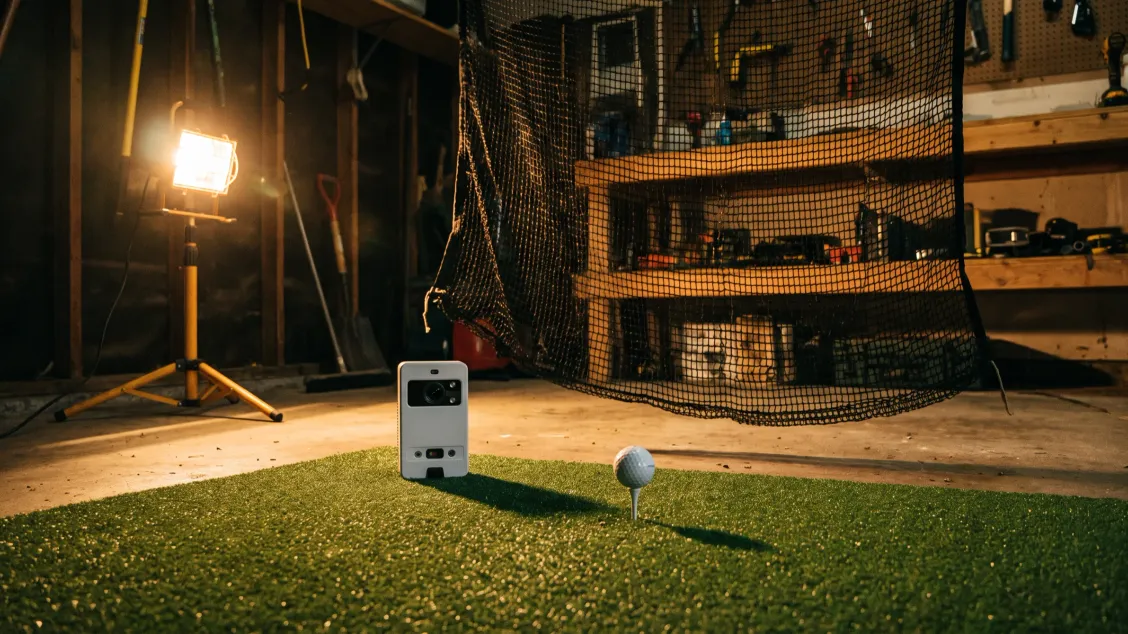
Quick answer
The lineup, with prices pulled from SkyTrak’s store on 2026-09-18 during its End of Summer Sale:
| Model | Price | Was | Sensors | Club data | Included |
|---|---|---|---|---|---|
| SkyTrak | $695 | $1,995 | Photometric camera | Club head speed derived from ball data | 14-day trial |
| SkyTrak ST MAX | $1,695 | $2,995 | Dual doppler radar plus photometric camera | Speed, smash, path, face angle, face-to-path | 1 year of Core (FS) |
| SkyTrak ST+, certified pre-owned | $895 | $2,495 | Dual doppler radar plus photometric camera | Speed, smash, path, face angle, face-to-path | 14-day trial |
The ST+ is the model most reviews still test, and SkyTrak has stopped selling it new. Its product page now reads “This launch monitor is no longer available,” so the only routes to one are the $895 certified pre-owned listing or the used market. For a new radar unit the ST MAX is the option, and the $1,695 tag plus a free year of Core is promotional, so check it the day you buy.
The room is the reason to pick a SkyTrak
SkyTrak’s sales pitch is a floor plan. Its space planner makes the comparison itself: a SkyTrak “sits next to the ball vs other launch monitors that require up to 8’ behind the hitting area.”
That changes which rooms qualify. SkyTrak’s FAQ puts the launch monitor minimum at “a minimum space of 10’ wide x 10’ deep is recommended, with enough ceiling height to safely swing your longest clubs.” For comparison, the Garmin R10 needs 15 feet of length because the radar has to sit 6 to 8 feet behind the mat and the ball still has to travel 8 feet to the net.
For a full bay, SkyTrak’s numbers go up:
- Ceiling: 10 feet. SkyTrak’s wording is that “a ceiling height of 10’ typically offers ample clearance for most golfers, however many golfers say that 9’ is enough.”
- Width: 12 feet. SkyTrak suggests this “for a more spacious feel,” plus 1 to 2 feet more if a left-hander shares the bay.
- Depth: 17 feet. A comfort figure, 7 feet beyond the launch-monitor minimum.
- Smallest enclosure: 8.5 feet wide by 15 feet deep by 8 feet high, which is SkyTrak’s published minimum for its Studio 8.
So there are two honest answers to the space question. A net, a mat and 10 by 10 feet gets the unit working. A projector enclosure you would happily spend a winter in asks for closer to 12 by 17, and SkyTrak’s own Studio 8 trades width for depth at 8.5 by 15.
How SkyTrak reads a shot
The $695 original is a photometric camera unit. It photographs the ball leaving the hitting zone, measures ball speed, launch angle, back spin, side spin and side angle from those images, then models carry and total distance from there. It reports club head speed, but SkyTrak derives that from the ball numbers; no sensor is watching the club.
The ST+ and ST MAX add dual doppler radar to the same camera. Radar is what gives them real club numbers: club head speed, smash factor, club path, face angle and face-to-path. The hitting zone differs between them too. SkyTrak lists roughly 2 inches square for both the original and the ST+, and roughly 4 inches square for the ST MAX, which matters more than it sounds when you are trying to tee up in the same spot 60 times.
Neither one reads angle of attack on its own. SkyTrak sells that as an add-on: SuperTags are club-mounted sensors that feed the app four more metrics: angle of attack, shaft lean, shaft angle and backswing length. The 14-club bundle runs $629.90, which makes it a hardware purchase of its own. Every SkyTrak reports a 4 hour battery, 2.4GHz WiFi, and a body a shade under 7 inches tall at 1.7 lbs.
What the independent tests say
Two reviewers ran a SkyTrak+ against professional units. Both liked the speed and distance numbers. Only one published a dispersion figure, and that is the number that came back wrong.
Plugged In Golf tested it head to head with a Foresight GCQuad indoors on premium balls. Ball and club speeds were “consistently within 1 MPH,” launch angles “usually within one degree,” and spin “typically within a couple hundred RPM.” The verdict: “I would have no issue using the SkyTrak+ in a professional setting.” The complaints landed on the hardware experience: a setup that took three support calls, and occasional wireless dropouts to the iPad.
Breaking Eighty compared it against a TrackMan and found “clubhead speed, carry distance, and spin were all right in line across my gap wedge, 7 iron, and driver.” Then the outlier: “the biggest issue, however, was side carry. It seemed like the SkyTrak+ doubled(ish) whatever number I got from the Trackman.”
The honest read: distance and speed numbers are good enough to plan with. Side carry drew a 2x flag from the one reviewer who published a figure for it, so if a SkyTrak tells you a shot leaked 30 yards right, treat that as a shape rather than a measurement.
Breaking Eighty’s separate ST MAX review found no accuracy gap between the two radar units, describing the ST MAX as carrying “the same trusted accuracy as SkyTrak+” with the same data package and software. Written while both were on sale, its recommendation was to “grab the SkyTrak+ unless you really want speed training.” SkyTrak has since pulled the ST+, which settles the question by removing one of the options.
The membership is the real annual cost
The membership is the recurring line, and the tier you need depends on whether you want to play courses or hit balls at numbers.
| Tier | Price | What you get |
|---|---|---|
| Basic | Free | SkyTrak Driving Range, Sim Club membership, PinSeeker contests |
| Essential | $99.99/yr | Practice range library, game evaluation library, challenges, bag mapping |
| Core: Foresight | $299.99/yr | Everything in Essential plus course play, 49 courses, 1 new course a month |
| Core: Trackman | $349.99/yr | Everything in Essential plus course play, 51 premium courses |
| Elite | $599.99/yr | Both course packs, 2 new courses a month, 10% off the SkyTrak shop |
Run the tier you want over 3 years before you commit: Core: Foresight comes to $899.97, Elite to $1,799.97. The package-by-package math across the major simulator platforms sits in its own post.
Year one, before a net or mat, lands roughly here. An original SkyTrak on Essential is $794.99. A certified pre-owned ST+ on Core is $1,194.99. An ST MAX is $1,695 flat, because its free year of Core covers the software line.
The software catch
SkyTrak owners play on SkyTrak’s Course Play library, and that is close to the whole list.
GSPro publishes 31 supported launch monitors, from the Garmin R10 to the Foresight GCQuad. SkyTrak is not among them. GSPro’s FAQ addresses it directly: “For other launch monitors such as Skytrak, and other launch monitors, please let those companies know you want to play GSPro!”
Third-party connections in general have narrowed. Breaking Eighty’s review notes SkyTrak “no longer support an official connection to third-party software like E6 and GSPro” for new customers, with existing users keeping what they had. SkyTrak’s own store and membership pages now sell only its Course Play libraries.
Whether that is a problem depends on your course taste. The Foresight pack’s 49 courses include Pebble Beach, Muirfield and Kingsbarns, which covers most people. If you wanted GSPro’s 2,500+ community-built courses, that decision has to happen before the hardware purchase, because no membership tier buys it later.
Who a SkyTrak simulator fits
Golfers with a shallow room. A 10 by 10 space with a net rules out a radar unit and works for a SkyTrak. That single fact settles the decision for a lot of garages and spare bedrooms.
Indoor iron practice, all winter. Speeds within 1 mph of a GCQuad and launch within a degree are more precision than a gapping session needs. A run of honest sessions turns “my 7-iron goes 165” into a median you can plan around, and gapping work is one of the reliable ways to move a Handicap Index without touching your swing.
Anyone happy inside one ecosystem. If Pebble Beach and 48 other courses for $299.99 a year sounds like a full winter, the software lock-in costs you nothing.
Bargain hunters at $695. The original camera unit reads no club data directly, estimating club head speed from the ball, and its hitting zone is roughly 2 inches square against the ST MAX’s 4. It still reports the ball numbers that matter for distance work at about 40% of the ST MAX price.
Who it doesn’t fit
Anyone who wants GSPro. It is not on the supported list and no subscription changes that. Buy hardware from GSPro’s list instead.
Club fitting and driver work. SuperTags add angle of attack for $629.90, and you are still working off a consumer unit instead of a fitter’s reference. A GCQuad or TrackMan bay exists for a reason.
Shot-shape analysis. Breaking Eighty measured side carry at roughly double a TrackMan’s reading. Use SkyTrak’s dispersion to compare your own swings against each other. Leave it at home when you go for a lesson.
Rooms under 10 by 10. That is SkyTrak’s published minimum, and it assumes enough ceiling to swing your longest club safely. Below it you are outside the envelope SkyTrak publishes a number for, and a camera that cannot see a full swing has nothing good to report.
The next step
Two jobs sit outside what any launch monitor can do: picking the ball you should be hitting outdoors, and deciding what to work on when the indoor numbers come back ugly.
We build the GameCaddie apps, so read this knowing that. BallCaddie matches you to a ball from 72 models in about 90 seconds: Find your ball. PracticeCaddie turns a 10-drill assessment into a golf practice plan instead of another winter of 7-irons into a net: Build an AI practice plan.
Both are free to start, no card. For the whole suite, Get every app.
For deeper dives
- What is a good golf handicap? the numbers behind every scoring benchmark
- Garmin R10 golf simulator the radar alternative, and the 15 foot room it needs
- Golf simulator software: cost and what it works with the major packages and their 3-year math
- Best golf launch monitor under $600 where the $695 SkyTrak sits against the budget band
- Strokes gained explained what to do with the numbers once you have them
Key takeaways
- SkyTrak sits next to the ball, so its stated minimum is 10 feet wide by 10 feet deep, against the 15 feet of length a Garmin R10 needs.
- Prices checked on 2026-09-18 during SkyTrak’s End of Summer Sale: $695 original, $1,695 ST MAX with a free year of Core, $895 for a certified pre-owned ST+.
- The ST+ and ST MAX share sensors, data and software. The ST MAX adds GOLFTEC Speed Training, dual USB-C, a faster processor and a 4 inch hitting zone against the ST+’s 2. SkyTrak no longer sells the ST+ new.
- Plugged In Golf measured ball and club speeds within 1 mph of a GCQuad and launch within a degree; Breaking Eighty measured side carry at roughly double a TrackMan’s.
- No SkyTrak unit reads angle of attack on its own. Club-mounted SuperTags add it, and the 14-club bundle is $629.90.
- GSPro’s 31-monitor compatibility list does not include SkyTrak, and SkyTrak’s official third-party connections like E6 are closed to new buyers. Course Play is the path.
- Membership is the recurring cost: free Basic, $99.99/yr Essential for practice, $299.99/yr for course play, $599.99/yr for both course packs.